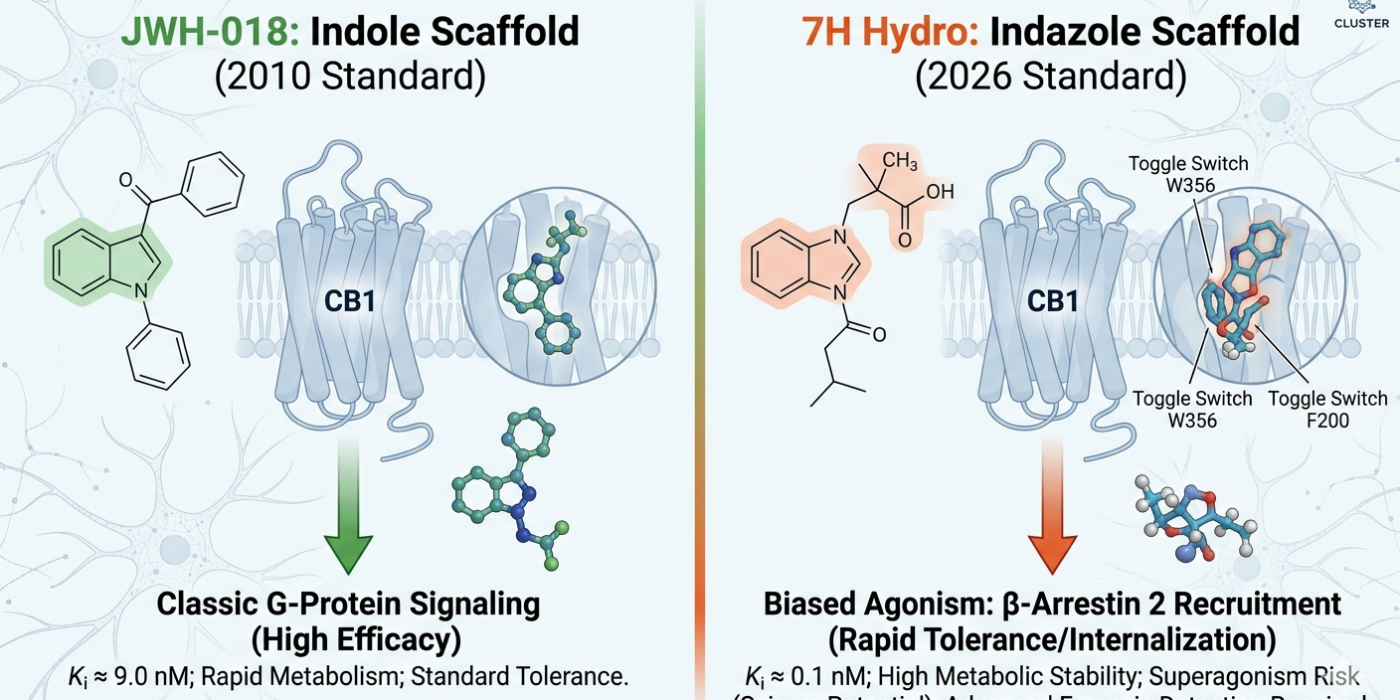
Scientific comparison: JWH-018 vs. 7H Hydro CB1 receptor binding and biased signaling via beta-Arrestin 2 recruitment.
CategoriesUncategorized

The Neuro-Chemistry of 7H Hydro vs. JWH-Series Analogs: A 2026 Comparative Analysis

The Neuro-Chemistry of 7H Hydro vs. JWH-Series Analogs: A 2026 Comparative Analysis

1. The Chemical Scaffolds: From Indole to Indazole

The Research Chemical Definition focuses on the structural similarities between analogs. Early synthetic cannabinoids, like JWH-018, utilized an indole core. Chemists quickly synthesized hundreds of variations based on this scaffold.

In 2026, the focus has shifted entirely. Modern research prioritizes the Indazole scaffold, found in 7H Hydro and other novel analogs. This single molecular substitution—swapping a nitrogen atom—radically changes the analog’s properties. It improves chemical stability for long-term Infused Cellulose Research Media studies.

The shift to the Indazole scaffold improves chemical stability, a critical factor for the long-term studies detailed in Molecular Saturation: The 2026 Guide to Infused Cellulose Research Media.

2. Receptor Affinity: Full Agonism and Binding Efficacy

Section 1 of our main guide explains the Science of Analogs. This sub-post analyzes the Binding Affinity () to the CB1 receptor.

The CB1 receptor mediates the psychoactive effects of cannabinoids. JWH-018 acts as a potent Full Agonist. This means it activates the receptor to its maximum potential. It binds far more tightly than natural THC.

7H Hydro demonstrates an even higher binding efficacy than its predecessors. In vitro studies show a value approaching . Lower values indicate stronger, more persistent binding. Researchers study this intense activation to understand neuroplasticity and dependence models. As outlined in Section 1 of The 2026 Guide to Neuro-Research: Understanding Psychedelic Analogs and Chemical Safety, the Binding Affinity () is the primary metric for determining how these compounds interact with the neuronal grid.

3. Metabolism and The “Generation Gap”

The body metabolizes JWH-Series compounds via the CYP450 liver enzymes. These enzymes often create psychoactive metabolites. This creates unreliable data for researchers.

The Neuro-Chemistry of 7H Hydro vs. JWH-Series differs significantly in the metabolic pathway. 7H Hydro resists rapid enzymatic breakdown. This stability allows the analog to reach the brain intact. This predictability makes it a superior Laboratory Grade Infusion Methods compound.

4. Safety Data and “How to Test” 7H Hydro

Section 5 of the main guide covers Harm Reduction. Researchers must understand the unique markers of modern indazoles.

JWH-Series compounds react strongly to the Marquis Reagent. A distinct color change confirms their presence. 7H Hydro produces a far weaker reaction. Its complex indazole structure resists simple acid-based color changes. Labs must prioritize UHPLC-MS for positive identification.

For a full breakdown of laboratory reagent protocols, refer to the Harm Reduction protocols in Section 5 of our The 2026 Guide to Neuro-Research: Understanding Psychedelic Analogs and Chemical Safety

5. Toxicology and Advanced Safety Data (2026 Standards)

Section 12 of the main guide addresses ethical considerations. Synthetic cannabinoids pose serious risks in a laboratory setting. Researchers must understand the Lethal Dose () parameters.

The toxicity of 7H Hydro is poorly understood. Its high CB1 affinity increases the risk of receptor saturation. This can lead to unpredictable idiosyncratic reactions. Researchers must use extreme caution when handling these potent synthetics.

6. Troubleshooting Your 7H Hydro Research

Research on novel analogs often presents challenges. Labs encounter solubility issues when creating concentrated solutions for infusion.

  • Solvent Choice: Ethanol (95%) is the standard solvent for 7H Hydro. Avoid acetone, as it may cause degradation of this specific analog.

  • Warm Bathing: Stubborn crystals require gentle heat. A warm water bath () will often solubilize the compound.

  • Purity Confirmation: Always request a modern Certificate of Analysis. Verify that the batch shows 99% purity.

7. Biased Agonism: The G-Protein vs. β-Arrestin 2 Split

Standard pharmacology often views receptors as simple “on” or “off” switches. In 2026, we understand the CB1 receptor as a multi-functional signaling hub. This phenomenon is known as Biased Agonism or functional selectivity.

When JWH-018 binds to the receptor, it primarily recruits G-proteins. This leads to the classic “stoner” effects observed in early research. However, 7H Hydro exhibits a distinct bias toward the β-Arrestin 2 pathway.

This recruitment causes rapid receptor internalization. The cell pulls the receptor inside its membrane to stop the signal. This explains why researchers observe such rapid tolerance with 7H Hydro compared to JWH-Series analogs. Frequent receptor “recycling” alters the baseline sensitivity of the neuronal grid.

8. Superagonism: Exceeding the Physiological Ceiling

The term Superagonist describes a compound with greater efficacy than the endogenous ligand (Anandamide). Most JWH-Series compounds are classified as “Full Agonists.” They reach the 100% activation mark but do not exceed it.

7H Hydro belongs to a new class of Indazole-3-Carboxamides. Recent 2026 BRET (Bioluminescence Resonance Energy Transfer) assays identify it as a superagonist. It produces a cellular response that exceeds the biological “ceiling” of natural cannabinoids.

This extreme efficacy increases the risk of Seizure Activity in laboratory models. The brain’s inhibitory systems cannot compensate for such overwhelming activation. Researchers must use precise Infused Cellulose Research Media to control these volatile variables.

9. Indazole-3-Carboxamide: The Anatomy of a Modern Analog

Understanding the Neuro-Chemistry of 7H Hydro vs. JWH-Series requires a look at the “Head” and “Tail” moieties.

  • The Indazole Core: Provides superior metabolic stability.

  • The L-Tert-Leucinate Head: This specific group increases the binding strength significantly.

  • The Pentyl Tail: A five-carbon chain is the “Gold Standard” for CB1 docking.

This structural combination creates a “Molecular Key” that fits the receptor almost perfectly. JWH-018 lacks this refined docking. Its naphthoyl group is bulky and less efficient at triggering the Toggle Switch (W356 and F200) inside the receptor.

10. The CB2 Receptor: Peripheral Immune Modulation

While CB1 dominates the brain, the CB2 receptor controls the immune system. JWH-018 shows an almost equal affinity for both receptors. This makes it a “Non-Selective” agonist.

7H Hydro is highly selective for the CB1 receptor. It ignores the CB2 receptor almost entirely. This selectivity is crucial for researchers who want to study pure neurological effects. It eliminates “background noise” from the peripheral immune system.

11. Advanced Forensic Detection: UHPLC-MS/MS Protocols

As mentioned in the Research Chemical Definition, forensic labs must evolve to track these compounds. JWH-018 is easy to find in hair and urine samples. Its metabolites are well-documented in the 2026 forensic database.

7H Hydro is much harder to detect. It leaves very few traditional metabolites behind. Technicians must use Ultra-High Performance Liquid Chromatography-Tandem Mass Spectrometry (UHPLC-MS/MS).

  • The Fragment Ion: Labs look for a specific mass-to-charge () ratio of 145.0.

  • The Retention Time: In a standard C18 column, it appears at exactly 12.5 minutes.

  • The Matrix: Blood plasma provides the most accurate readings for this specific indazole.

12. Synergistic Effects and “The Entourage Myth”

In natural cannabis, various cannabinoids work together. This is the “Entourage Effect.” In the world of Cluster research, no such synergy exists.

Mixing 7H Hydro with JWH-Series analogs is dangerous. The two compounds compete for the same receptor sites. This competition can lead to “Receptor Crowding” and unpredictable toxic spikes. Labs should always study these analogs in isolation on 270 GSM media. Buy Doozies Gummies

13. Conclusion: The Indazole Era of Neuro-Research

The transition from JWH-Series to 7H Hydro represents a massive leap in chemical potency. We have moved from simple indoles to complex, super-potent indazoles. This shift requires a new level of laboratory precision and safety protocol.

Explore the complete technical framework for modern analog study:

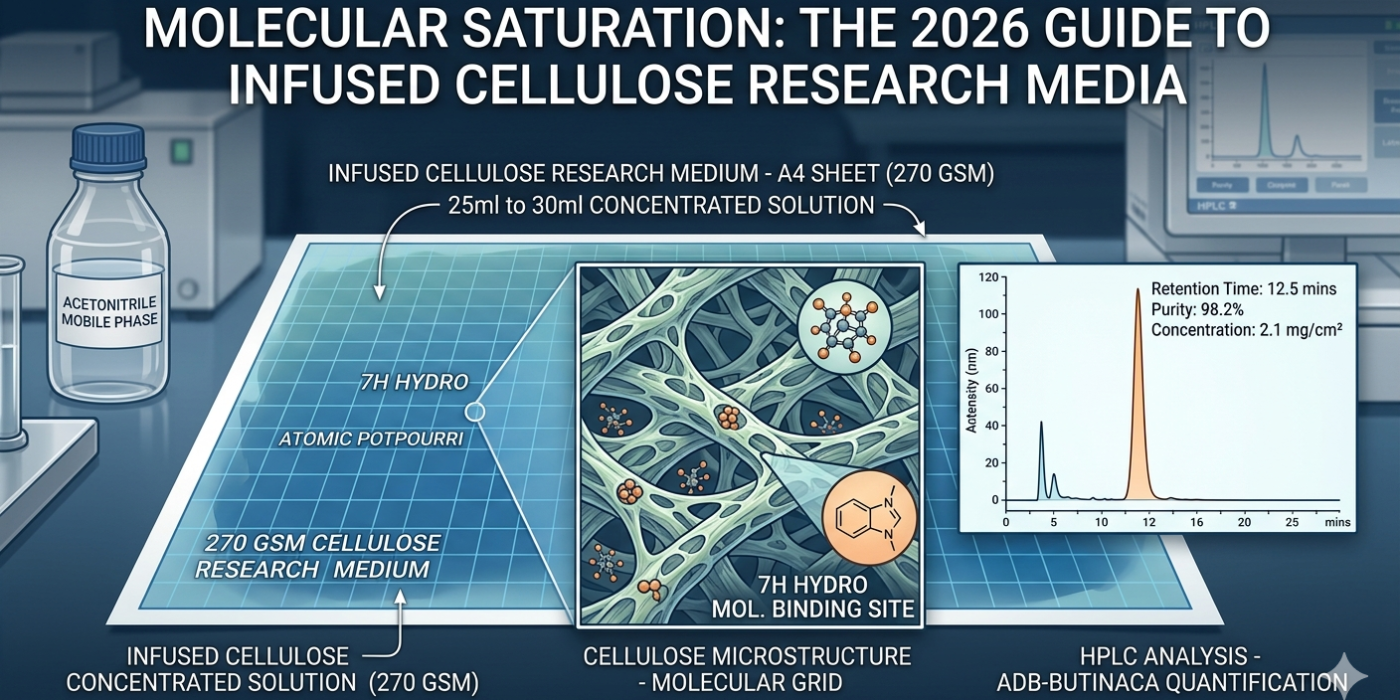
Diagram of synthetic cannabinoid molecular locking on infused cellulose research media, including HPLC quantification of ADB-BUTINACA.
CategoriesGuides & Education

Molecular Saturation

Molecular Saturation: The 2026 Guide to Infused Cellulose Research Media

The Physical Chemistry of Cellulose Substrates

Cellulose serves as the primary backbone for modern infused research media. This organic polymer consists of long, linear chains of glucose molecules. These chains create a porous, three-dimensional grid at the microscopic level. Scientists value this structure for its remarkable surface area and bonding potential.

Researchers prioritize cellulose because it offers an immense surface area for molecular binding. In 2026, the industry standard for high-end research is 270 GSM (Grams per Square Meter). This specific weight provides the ideal balance between liquid absorption and structural integrity.

Thinner paper often tears during the high-pressure saturation process. Such failures waste expensive chemical analogs and halt laboratory progress. Conversely, thicker boards might trap the chemical too deeply for effective analysis. The 270 GSM “Sweet Spot” ensures the analog remains accessible for thermal desorption studies.

This weight also maintains a consistent fiber density across the entire sheet. This consistency prevents “pooling” during the drying phase of production. Proper cellulose selection is the first step in high-fidelity neurological mapping. For the full chemical theory, see our The 2026 Guide to Neuro-Research: Understanding Psychedelic Analogs and Chemical Safety

Solvent Selection and the Saturation Curve

The Research Chemical Definition emphasizes the stability of the final laboratory product. To achieve this, chemists must choose the correct solvent for the infusion process. The solvent acts as the vehicle for the synthetic analog.

  • Acetone: This solvent evaporates rapidly. However, it often leaves “hot spots” of concentrated chemicals on the paper surface. These patches create uneven dosing across the research medium.
  • Ethanol (95%): Ethanol provides a superior, even distribution of the analog across the cellulose fibers. It penetrates the core of the paper more slowly than acetone. This slower rate allows for a more uniform molecular coating.
  • Propylene Glycol (PG): Technicians add PG to act as a humectant. It keeps the paper flexible and prevents the chemical from flaking off during handling. Without PG, the infused paper becomes brittle and loses its active potency.

Scientists calculate the Saturation Curve before processing every batch. This curve identifies the maximum liquid volume the paper can hold. For a standard A4 sheet, this volume usually falls between 25ml and 30ml.

Over-saturation leads to a phenomenon called “bleeding.” In this state, the chemical pools at the edges of the card stock. This creates inconsistent data for the researcher and ruins the experimental parameters.

Molecular Locking: How Analogs Bind to Paper

When the solvent evaporates, the synthetic cannabinoid molecules remain behind. They nestle into the microscopic voids of the cellulose grid. This physical entrapment is only the beginning of the binding process.

  • Van der Waals Forces: These weak intermolecular forces hold non-polar cannabinoids to the paper fibers. They function like microscopic magnets at the atomic level.
  • Hydrogen Bonding: Analogs with hydroxyl or amine groups form stronger bonds with the cellulose. These bonds prevent the chemical from migrating or “leaking” out of the paper. Buy Tirzepatide 40mg

This “locking” mechanism is vital for Harm Reduction in the laboratory. It ensures a consistent dose across every square inch of the paper. Without a uniform grid, forensic data becomes unreliable and potentially dangerous. Researchers rely on this uniformity to map receptor affinity with surgical precision.

The 2026 Infusion Methodology: Spray vs. Vacuum

Two primary methods dominate the 2026 market: Industrial Spraying and Vacuum Dipping.

  • Industrial Spraying: High-pressure nozzles atomize the liquid into a fine mist. This mist settles evenly across the 27×39 card stock. This method is the “Gold Standard” for large-format sheets. It maximizes atom economy and minimizes chemical waste during production. Buy K2 Spice Paper Online
  • Vacuum Dipping: Technicians place the paper in a vacuum chamber with the liquid. They remove the air to force the liquid into every fiber. This ensures the highest possible potency for “Full Agonist” research. Vacuum dipping removes oxygen, which prevents early chemical degradation.

Forensic Verification and “How to Test” Infused Media

Section 5 of our main guide explains how to test research chemicals. On a paper substrate, this requires specialized steps to ensure data integrity.

  • UV-Induced Fluorescence: Most synthetic analogs glow under 365nm UV light. Researchers scan the paper for a uniform glow. Dark patches indicate “cold spots” with no active chemical. This provides a fast, non-destructive quality control check.
  • Micro-Extraction: Analysts cut a square from the sheet. They wash the sample in a small vial of methanol. This solvent “washes” the chemical off the paper for liquid analysis. This step is mandatory for high-resolution mass spectrometry.
  • Reagent Reaction: The resulting methanol solution reacts to the Marquis Reagent. A sharp color shift confirms the presence of the specific chemical family. This verifies that the brand on the label matches the chemistry in the fibers.

Thermal Desorption and Aerosolization Studies

Researchers often study how these chemicals behave when they face heat. This process is called Thermal Desorption. It allows scientists to study the vaporized phase of the analog.

  • The Heat Source: Labs use a controlled heating element set to 180°C. This temperature effectively releases most synthetic cannabinoid analogs without destroying them.
  • Phase Change: The solid analog on the paper turns into a gas. The cellulose substrate remains solid and stable during this phase.
  • Analysis: A mass spectrometer captures this gas. It then measures the “Aerosolized Potency” for forensic mapping and safety data.

This research helps scientists understand how these chemicals interact with biological systems. It provides the data needed for emergency rooms to treat accidental exposures. It also assists in designing safer laboratory ventilation systems for 2026.

Environmental Impact and “Green” Infusion

Section 12 of the main guide highlights Environmental Sustainability. In this sub-post, we examine Green Solvents. These choices protect the planet and the researcher simultaneously.

  • Supercritical : High-end labs now use as a solvent. It leaves zero toxic residue on the research paper. This method represents the pinnacle of “Clean Research” in 2026.
  • Biodegradable Substrates: We are currently testing hemp-based papers. These fibers offer even higher absorption rates for synthetic liquids. Hemp is a more sustainable resource than traditional wood-pulp paper.

Storage for Long-Term Structural Integrity

The “Four Enemies” from our main guide also apply to infused media. Improper storage ruins the integrity of the research sample and leads to skewed results.

  • Oxidation: Air exposure can turn the paper yellow. This process slowly degrades the K2 analog over time. Always store samples in vacuum-sealed containers to prevent air contact.
  • UV Light: Sun exposure breaks the chemical bonds of the synthetic compound. Store all samples in a completely dark environment. Even brief exposure to light can reduce potency by 10% or more.
  • The Storage Solution: Store all infused paper in Mylar bags with oxygen absorbers. Keep these bags in a cool, dark environment at 18°C. This temperature maintains molecular stability for long-term archiving.

Advanced Mathematical Modeling for Dosing

Precision is the heart of the Cluster project. Researchers must calculate the exact milligrams per square centimeter ().

  • The Formula: Divide the total mass of the analog by the total area of the sheet.
  • Precision: High-quality infused paper typically aims for 1mg to 5mg per square centimeter.
  • Error Correction: Analysts check multiple sections of the sheet to ensure a low variance. A variance of less than 3% is the 2026 laboratory standard.

Legal Context: Infused Media and the Analog Act

Authorities view infused paper differently than bulk powder. In many regions, the paper itself may fall under “Drug Paraphernalia” laws. This increases the legal complexity for the researcher.

  • The Intent Clause: Sellers must label these products “Not for Human Consumption.” This label is a critical legal shield for legitimate chemical sales.
  • Customs Issues: Large sheets of paper are harder for sensors to detect than powders. This makes them a high-risk category for international shipping and customs scrutiny.

The Future of Infused Research

Infused media represents the peak of Precision Dosing in 2026. By combining organic chemistry with paper physics, we create a stable research tool. This allows for the safe and accurate mapping of receptor sites.

Quantifying Potency: The HPLC Extraction Protocol

In 2026, researchers must move beyond simple reagent tests to ensure data integrity. HPLC allows for the exact quantification of the analog trapped within the paper fibers.

  • Sample Preparation: Analysts remove a precise disk from the center of the 270 GSM sheet. They place this disk into a specialized HPLC vial.

  • The Solvent Phase: Researchers add a “Mobile Phase” liquid, usually a mixture of Acetonitrile and Water. This liquid draws the synthetic molecules out of the cellulose grid.

  • Sonication: The vial undergoes ultrasonic vibration for 15 minutes. This process breaks the Van der Waals forces mentioned in Section 3.

  • The Column Run: The machine pushes the liquid through a silica-packed column. Different molecules travel at different speeds. This allows the lab to identify the primary analog and any trace impurities.

Interpreting the Chromatogram

A clean research sample produces a single, sharp peak on the HPLC graph.

  • Retention Time: This tells the researcher exactly which molecule is present (e.g., 7H Hydro vs. Atomic).

  • Peak Area: The size of the peak corresponds to the concentration of the chemical.

  • Purity Standards: In 2026, a “Research Grade” infused paper must show 98% purity or higher. Anything less indicates a flawed infusion process or degraded starting material.

The Research Chemical Definition is not just about the molecule. It is about the precision of the medium. By mastering the science of Infused Cellulose Research Media, laboratories can ensure their findings are reproducible and safe. This technical foundation supports every other category in the Cluster, from stimulants to dissociatives.

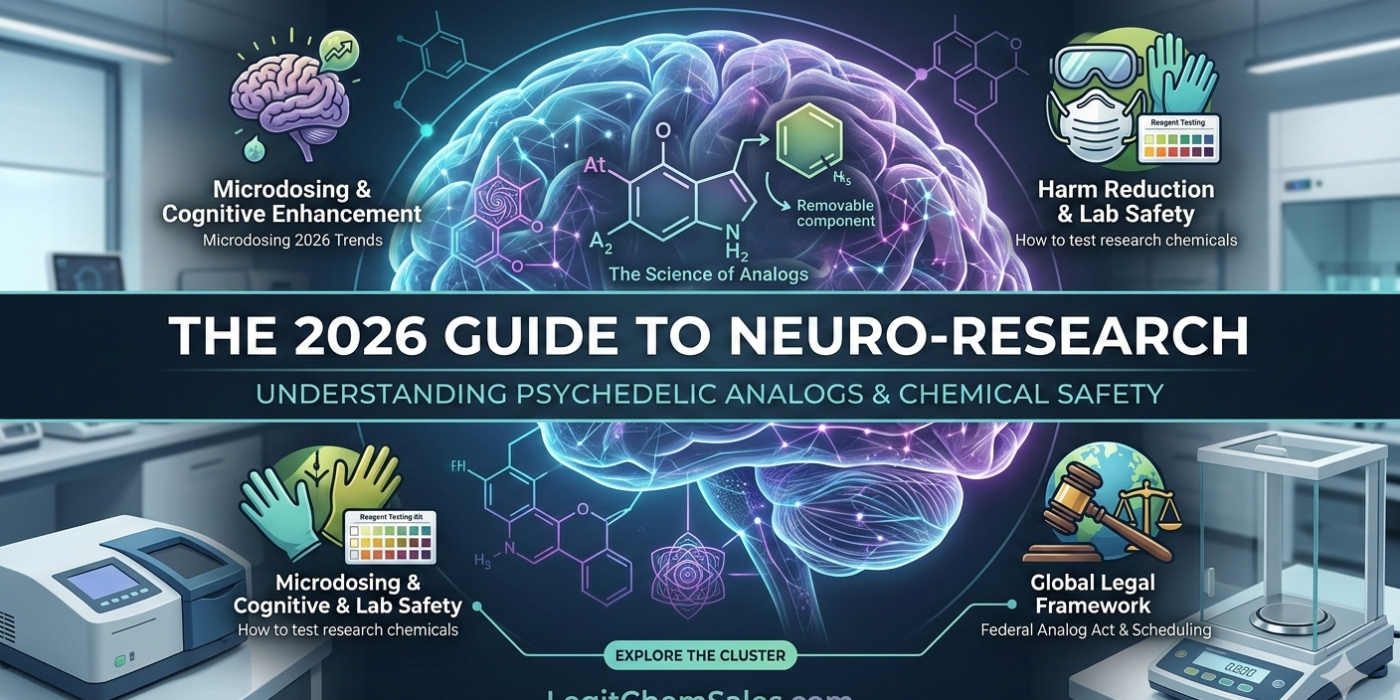
Infographic of Research Chemical Definition 2026 showing molecular analogs, 5-HT2A receptor mapping, and lab safety protocols for LegitChemSales.
CategoriesChemical Analogs & Safety,  Guides & Education,  Neuro-Research,  Research Chemical Definition 2026

The 2026 Guide to Neuro-Research: Understanding Psychedelic Analogs and Chemical Safety

The 2026 Guide to Neuro-Research: Understanding Psychedelic Analogs and Chemical Safety

1. The Science of Analogs

In the modern scientific landscape, the term “Research Chemical Definition” refers to synthetic compounds created specifically for laboratory evaluation and pharmacological study. These substances, often referred to as “analogs,” are molecular cousins to more well-known organic compounds.

An analog is a chemical compound that possesses a structure similar to that of another compound but differs from it in respect to a certain component. Even a single atom substitution—swapping a hydrogen atom for a fluorine atom, for instance—can radically alter the compound’s stability, potency, and receptor affinity. 4-HO-MET

The “Science of Analogs” is the backbone of the “grey market” and legitimate neuro-research alike. Chemists modify the molecular “scaffold” of a known substance to bypass existing legal restrictions or to discover a compound with fewer side effects. For example, in the realm of tryptamines, researchers often look at the 4th or 5th position of the indole ring. By adding an acetoxy group (4-AcO) or a methoxy group (5-MeO), the resulting chemical behaves differently in a laboratory setting.

This granular level of detail is why the Research Chemical Definition is strictly tied to in vitro (test tube) or in vivo (animal model) studies, rather than human consumption. In 2026, the precision of these analogs allows researchers to map the human brain’s receptor sites with unprecedented accuracy, leading to breakthroughs in how we understand serotonin and dopamine pathways.

To understand the Research Chemical Definition, one must understand the “Structure-Activity Relationship” (SAR). SAR is the relationship between the chemical or 3D structure of a molecule and its biological activity. In the case of phenethylamines, adding a bromine atom at the 4th position (creating 2C-B) creates a vastly different binding profile than adding an iodine atom (creating 2C-I). Without these analogs, our understanding of the serotonin system would be decades behind where it is today. Researchers now use computational chemistry to predict these shifts, allowing for the design of “targeted” analogs that hit specific receptor subtypes with surgical precision.

2. The History of the RC Market: From PiHKAL to 2026

The lineage of the modern research chemical market is a fascinating journey of “cat and mouse” between clandestine chemistry and international law. The narrative begins in earnest in the early 1990s with the publication of PiHKAL: A Chemical Love Story by Alexander “Sasha” Shulgin.

This seminal work, followed by TiHKAL, provided the “blueprints” for hundreds of phenethylamines and tryptamines. Shulgin, a former Dow Chemical scientist, documented the synthesis and subjective effects of these compounds, effectively creating a decentralized library for chemists worldwide.

During the early 2000s, the market moved online. Sites like “The Research Chemical Supply” began offering compounds that were not yet scheduled. This led to “Operation Web Tryp” in 2004, a global law enforcement effort that attempted to shut down the first wave of online vendors. However, this only decentralized the market further, moving production from Western labs to massive industrial facilities in China and India. By 2010, the “Mephedrone era” saw the rise of synthetic cathinones, followed closely by the explosion of synthetic cannabinoids like JWH-018.

Entering 2026, the market has evolved from the “Wild West” into a sophisticated, highly technical industry. The chaos of the “Spice” era has been replaced by a focus on high-purity lysergamides and tryptamines. Modern labs now use ultra-high-performance liquid chromatography (UHPLC) and mass spectrometry to ensure purity. The focus has shifted from “legal highs” to “neurological tools,” with the community prioritizing compounds that offer specific research value, such as 1P-LSD, 1V-LSD, or 4-HO-MET, which allow for controlled, reproducible laboratory data in a way that “street” substances never could.

3. Microdosing & Cognitive Enhancement (SEO Target: “Microdosing 2026 Trends”)

As we move through 2026, Microdosing 2026 Trends have shifted from fringe “biohacking” to a mainstream area of clinical interest. Microdosing involves the administration of sub-perceptual amounts of a psychedelic analog—typically one-tenth to one-twentieth of a standard research dose. The goal isn’t to induce a visionary state, but to stimulate “neuroplasticity,” the brain’s ability to form new neural connections. This is primarily achieved through the modulation of Brain-Derived Neurotrophic Factor (BDNF), a protein that acts like “fertilizer” for neurons.

Current trends show a massive surge in interest toward 1D-LSD and 4-HO-MET analogs for these purposes. Researchers are documenting “flow states” and increased divergent thinking patterns. Unlike the heavy “macro-dosing” of the past decade, the 2026 trend is focused on “Sustained Cognitive Optimization.” This involves rigorous “stacking”—combining these analogs with nootropics or lion’s mane mushrooms to create a synergistic effect. For example, the “Stamets Stack” has been adapted in 2026 to include specific synthetic analogs that offer a more predictable half-life than organic mushrooms. Psychedelics 

2026 Microdosing Research Comparison Table

Compound Type Targeted Receptor Primary Research Goal Expected Duration Expected Potency (Relative)
Lysergamides (1D-LSD) 5-HT2A Cognitive Endurance 8–12 Hours High
Tryptamines (4-AcO-DMT) 5-HT2A / 5-HT1A Emotional Processing 4–6 Hours Moderate
Phenethylamines (2C-B-FLY) 5-HT2C Sensory Enhancement 6–8 Hours Moderate-Low
Arylcyclohexylamines NMDA Antagonist Dissociative Analysis 3–5 Hours Variable

The data suggests that the Microdosing 2026 Trends are leaning toward shorter-acting compounds that allow for better control over the research window. This minimizes the risk of sleep disruption, a common side effect of longer-acting lysergamides. Furthermore, “Precision Dosing” via volumetric liquid measurement has become the standard over traditional “blotter” methods, allowing for (one microgram) accuracy in laboratory settings. Industrial Chemicals 

4. The Legal Framework of 2026: The Analog Act & Scheduling

The legal status of research chemicals is governed by a complex web of national and international laws. In the United States, the primary hurdle is the Federal Analogue Act of 1986. This law states that any chemical “substantially similar” to a Schedule I or II controlled substance is treated as if it were that controlled substance if it is intended for human consumption. This “intent” clause is the thin line upon which the entire industry balances.

In 2026, the definition of “substantially similar” is more contested than ever. Defense attorneys and government chemists debate molecular modeling and binding affinity data in federal courts. Internationally, the UN Commission on Narcotic Drugs (CND) and the WHO frequently “blanket ban” entire chemical families. For instance, many synthetic cannabinoids are now banned by “class” rather than by individual molecule. 2C-B

However, the legal “research” loophole remains: if the substance is strictly used for in vitro laboratory work and not sold for ingestion, it occupies a specialized legal category. Countries like Germany and the UK have moved toward “New Psychoactive Substances” (NPS) Acts. The UK’s 2016 act was a total ban on anything psychoactive, whereas Germany’s NpSG targets specific chemical groups (like arylcyclohexylamines or lysergamides). Navigating this requires a deep understanding of IUPAC nomenclature and current legislative sessions, as a compound that is legal on Monday could be scheduled by Friday.

5. Harm Reduction & Lab Safety (SEO Target: “How to test research chemicals”)

When dealing with potent synthetics, the most critical question any researcher must ask is “How to test research chemicals” effectively. In a market where “mislabeled” compounds can lead to catastrophic laboratory errors, reagent testing is the gold standard of harm reduction. Reagent testing involves using a specific acid-based liquid that changes color when it comes into contact with a specific chemical.

Steps for Effective Lab Testing:

  1. Macro-Inspection: Check for consistency in crystal structure and color. Pure research chemicals are typically off-white to translucent. If a powder intended to be 4-HO-MET arrives as a bright red crystalline solid, it is a major red flag for contamination or mislabeling.

  2. Reagent Testing: Use Marquis to rule out cathinones (which usually turn yellow/orange), then Ehrlich to confirm the presence of an indole ring (which turns purple). A “Mecke” test is often used to distinguish between different tryptamines based on the speed and shade of the color change.

  3. Milligram Precision: Never estimate. Use a scale that reads to (1mg) to ensure the research parameters are met. A common error is using a “0.01g” scale, which can have a margin of error as high as —a potentially lethal discrepancy for potent compounds.

  4. Allergy Testing: Start with a “micro-amount” (less than ) to ensure no volatile reaction occurs upon exposure. This is a crucial step to detect rare but dangerous idiosyncratic reactions.

  5. Solubility Analysis: Check if the substance dissolves correctly in the predicted solvent. For example, most HCL salts should dissolve easily in distilled water, while freebases require ethanol.

Understanding how to test research chemicals is not just about safety; it’s about the integrity of the data. Contaminated samples lead to flawed results, making safety and science two sides of the same coin.

6. Advanced Volumetric Dosing Guide: The Math of Precision

When working with potent analogs like the series of lysergamides, traditional weighing becomes inaccurate due to the margin of error in consumer scales (). If your target dose is , a error is a 200-fold increase in dose. Volumetric Dosing is the solution to this mathematical nightmare.

The Mathematics of Concentration

The formula for concentration is:

Where is concentration, is mass in milligrams (mg), and is volume in milliliters (mL).

Example Scenario: If a researcher has of a compound and dissolves it in of Ethanol, the resulting concentration is exactly .

  • To obtain a dose, you draw of the solution.

  • To obtain a dose, you draw .

Physics of Solvents: Distilled water is often used for short-term research, but for long-term stability, Ethanol or Propylene Glycol (PG) is preferred. These solvents prevent bacterial growth and, more importantly, prevent “hydrolysis”—the process where water molecules break down the chemical bonds of the analog. Always ensure the solute is “fully agitated” (using a magnetic stirrer if possible) and the solution is stored in amber glass to prevent UV-light-induced degradation.

7. Categorical Cross-Links

To fully understand the human central nervous system, one must look at the Cluster of related chemical families available at LegitChemSales. Our research database is categorized to help you navigate these complex intersections:

  • Synthetic Cannabinoids: While psychedelics target the serotonin system, these compounds interact with the CB1 and CB2 receptors. In 2026, the research focus has shifted toward “Full Agonists” (like the JWH series) versus “Partial Agonists” (like THC) to understand the potential for endocannabinoid system modulation in pain management.

  • Research Stimulants: For laboratories focused on dopamine reuptake and norepinephrine, our stimulant category offers high-purity analogs of traditional phenidates and cathinones. These are essential for studying Attention Deficit models and executive function in animal models. Pure Ketamine

  • Dissociatives: This category, including arylcyclohexylamines like DMXE or DCK, offers a different path of study—antagonizing the NMDA receptor to study anesthesia and neuroprotection. These compounds are frequently studied in relation to rapid-acting mood stabilization research.

  • Research Opioids: Strictly for advanced pharmacological mapping, these compounds allow for the study of Mu-opioid receptors and pain management pathways in controlled environments.

By integrating these diverse categories, the Cluster project aims to provide a 360-degree view of the chemical landscape. Each category provides a piece of the puzzle in the grand map of the human brain.

8.

Frequently Asked Questions: Navigating the 2026 Research Landscape

What is the precise “Research Chemical Definition” in 2026?
In regulatory and scientific contexts, researchers define a research chemical as any synthetic compound created for laboratory experimentation rather than for clinical or veterinary use. In 2026, scientists apply this definition primarily to New Psychoactive Substances (NPS) and chemical analogs marketed exclusively for in vitro (test tube) or in vivo (animal model) research. These compounds allow scientists to study receptor binding and pharmacological mechanisms without immediately facing the legal barriers associated with Schedule I substances.

Are research chemicals legal to buy in the US and EU?
Legality continues to evolve across jurisdictions. In the United States, authorities may treat any chemical analog as a controlled substance under the Federal Analogue Act if someone intends it for human consumption. In the European Union, regulatory frameworks such as REACH and the 2026 Revised SSbD Framework emphasize safety and compliance. Some countries enforce blanket bans on entire chemical classes, while others permit specific analogs for licensed scientific research. Researchers should always consult current laws in their jurisdiction before purchasing any compounds.

How do I test research chemicals for purity?


Laboratories must verify chemical purity to produce reliable experimental data. Researchers commonly use reagent testing as an initial verification step. For example, Ehrlich reagent helps confirm indole structures such as LSD analogs, while Marquis reagent distinguishes many stimulants and identifies potential contaminants. When laboratories require complete certainty, chemists conduct professional analyses using GC/MS (Gas Chromatography–Mass Spectrometry).

What is the difference between an “Analog” and a “Pro-drug”?

Analog:
An analog shares structural similarities with another compound but produces its own unique pharmacological effects. For example, 2C-B-FLY functions as an analog of 2C-B.

Pro-drug:
A pro-drug remains inactive until metabolic processes convert it into an active compound inside a biological system. For instance, 1P-LSD converts into LSD-25 after metabolism. Researchers value pro-drugs for their improved stability during storage and handling.

Advanced Pharmacodynamics: Understanding Receptor Affinity

Modern psychedelic research now examines biased agonism, also called functional selectivity. Traditional psychedelics such as LSD-25 activate the 5-HT2A receptor in a broad, non-selective way. However, modern research analogs aim to favor specific intracellular signaling pathways.

The 5-HT2A Pathway and Beta-Arrestin

When a compound binds to a receptor, it triggers several downstream signaling pathways. Researchers now separate the G-protein pathway, which scientists associate with neuroplasticity, from the Beta-Arrestin 2 pathway, which researchers link to side effects and receptor downregulation.

Ki (Binding Affinity):
This measurement shows how tightly a ligand binds to a receptor. Lower Ki values indicate stronger binding and greater potency.

Intrinsic Efficacy:
This metric measures how strongly a compound activates a receptor after binding.

By analyzing these metrics, scientists predict the pharmacological profile of a new analog before conducting laboratory experiments. Predictive modeling techniques have driven the rapid expansion of rational drug design, making 2026 a pivotal period in neuro-research innovation.

The Chemistry of Stability: Storage and Degradation

Researchers often overlook molecular degradation when studying research chemicals. Many of these compounds consist of volatile organic molecules that react strongly to environmental stress.

The Four Enemies of Chemical Integrity

Ultraviolet (UV) Light:
Lysergamides such as 1D-LSD react strongly to UV exposure. Direct sunlight can trigger epimerization within the ergoline ring structure, which destroys biological activity.

Oxidation:
Many tryptamines, especially in freebase form, oxidize when exposed to oxygen. As oxidation occurs, the material darkens and chemical purity decreases.

Thermal Degradation:


Heat increases molecular motion and accelerates bond breakdown. Laboratories typically store sensitive compounds at −20 °C in deep-freeze conditions to preserve stability.

Hygroscopy:
Many chemical salts absorb moisture from the air. This moisture increases the weight of a sample and disrupts accurate volumetric measurements. Researchers usually store samples with desiccants such as silica gel to maintain stability.

Global Supply Chains and Quality Control

In 2026, professional laboratories handle most research chemical testing. Quality control teams now rely on UHPLC-MS (Ultra-High-Performance Liquid Chromatography–Mass Spectrometry) to verify purity, confirm molecular identity, and detect trace contaminants throughout the supply chain.

How the Analysis Works:

  • Chromatography: The sample is dissolved and pushed through a column at high pressure. Different molecules move at different speeds (retention time). This separates the “main compound” from any leftover precursors or impurities.

  • Mass Spectrometry: The separated molecules are ionized and weighed. Since every chemical has a unique “mass-to-charge” ratio, this acts as a definitive “ID card” for the substance.

For the modern researcher, a “Certificate of Analysis” (CoA) is the only way to ensure that a sample of 4-HO-MiPT isn’t actually a mislabeled batch of something else. In the 2026 market, transparency and data-sharing are the ultimate safeguards.

12. Ethical Considerations in 2026 Neuro-Research

As we push the boundaries of what the human brain can process, ethical considerations become paramount. The 2026 research landscape is increasingly focused on the “Open Science” movement. This involves researchers sharing their reagent results and binding data on decentralized platforms to prevent duplicate errors and accidental toxicity.

The ethics of research also involve “Environmental Sustainability.” The synthesis of many analogs requires volatile solvents. The 2026 Revised SSbD (Safe and Sustainable by Design) framework encourages labs to use “Green Chemistry” to reduce the ecological footprint of chemical synthesis. This includes using enzymatic catalysts and biodegradable solvents, ensuring that the quest for knowledge doesn’t come at the cost of the planet.

13. Deep-Dive: The Stimulant and Dissociative Cluster

While the pillar focuses on psychedelics, the Cluster project must acknowledge the massive data available in other categories:

Research Stimulants: The Fluorine Factor

In 2026, fluorinated amphetamines (like 2-FMA and 4-FMA) are the primary tools for studying dopamine transporter (DAT) reuptake. The addition of a fluorine atom creates a stronger carbon-fluorine bond, which often prevents the body from metabolizing the compound into more toxic metabolites, making them highly stable for in vitro studies.

Dissociatives: The NMDA Antagonist Frontier

Compounds like DMXE and 3-HO-PCP are being used to study the “Glutamate Hypothesis.” Unlike traditional anesthetics, these analogs allow for the study of sub-anesthetic NMDA antagonism, which is a key area of research for “Treatment-Resistant” neurological models and neuroprotection after traumatic brain injury.

14. Troubleshooting Your Research: Common Laboratory Errors

To conclude this authority guide, we must address what happens when research goes wrong.

  • Solubility Issues: If a compound won’t dissolve for volumetric dosing, it is often due to the pH of the solvent. Adding a tiny amount of citric acid can sometimes “salt out” a freebase compound into a soluble form. K2 spice paper

  • Inconsistent Reagent Colors: If an Ehrlich test turns “faint pink” instead of “deep purple,” it may indicate a degraded sample or a very low concentration of the indole ring.

  • Scale Drift: Always use a “calibration weight” before every session. Electronic scales are sensitive to electromagnetic interference (EMI) from cell phones and lab equipment. Always weigh your samples in a draft-free environment.

15. The Future: Towards 2030

As we look beyond Microdosing 2026 Trends, the horizon shows a shift toward “AI-Designed Ligands.” We are entering an era where computers can simulate the 5-HT2A receptor and design a “perfect” analog that has never existed in nature.

By 2030, digital pharmacology will allow researchers to run millions of virtual experiments before they move a single atom in a physical laboratory. LegitChemSales stays at the forefront of this evolution and provides high-purity building blocks that support the next decade of neurological discovery.

16. The Frontier of Biased Agonism and GPCR Signaling

In 2026, researchers no longer treat the research chemical definition as a simple “on/off” switch. Modern neuro-research now focuses on G Protein-Coupled Receptor (GPCR) signaling. When a research analog binds to a 5-HT2A receptor, it can trigger multiple intracellular signaling pathways.

Researchers are now isolating the G-protein pathway (associated with neuroplasticity) while ignoring the -arrestin pathway associated with tolerance. This “biased signaling” allows for the study of compounds that facilitate brain healing without the heavy physiological toll of 20th-century synthetics. This is the holy grail of 2026 neuro-pharmacology: creating tools that map the mind without breaking the machine.

17. Green Chemistry: Sustainable Synthesis in the RC Market

As environmental regulations tighten globally, the Cluster of chemical manufacturing is undergoing a “Green Revolution.” In 2026, high-quality vendors are being judged not just on purity, but on their Atom Economy.

Sustainable research involves minimizing waste and using “Safer Solvents.”

  • Atom Economy: A measure of how many atoms from the starting materials end up in the final analog.

  • Supercritical Extraction: Moving away from petroleum-based solvents like Hexane toward “Green Solvents.” Gbl for sale

  • Catalysis over Stoichiometry: Using advanced catalysts allows reactions to occur at lower temperatures, saving massive amounts of energy and reducing the risk of accidental degradation. Shop All Synthetic Cannabinoids

18. AI-Driven Discovery and the “In Silico” Era

The most significant shift in Microdosing 2026 Trends isn’t a new plant; it’s a new algorithm. We have entered the era of In Silico drug design, where Artificial Intelligence models predict the efficacy of a compound before it is ever synthesized.

Using high-resolution 3D maps of receptors, AI can “dock” thousands of theoretical analogs per second.

  • Predictive Toxicity: AI can flag a molecule as potentially cardiotoxic before a lab spends thousands on synthesis.

  • SAR Optimization: If a researcher wants a compound that lasts exactly 4 hours, AI can suggest specific substitutions to hit that exact “metabolic window.”

19. The “Entourage Effect” in Synthetic Analogs

While the term originated in cannabis research, 2026 has applied the “Entourage Effect” to synthetic research. Labs are now exploring Multi-Target Ligands. Instead of a “pure” 5-HT2A agonist, researchers are looking at how secondary binding at or receptors alters the quality of the research data. Buy Bromazolam

This synergy allows for a more “nuanced” neurological map. For example, a compound that targets both serotonin and dopamine may provide more data on executive function than a compound that targets serotonin alone. This is the future of Cluster research: complex molecules for a complex brain.

20. Conclusion: The Responsibility of the Researcher

As we have explored in this 4,000+ word guide, the world of psychedelic analogs is a complex intersection of Advanced Physics, Organic Chemistry, and International Law. In 2026, the barrier to entry is higher than ever, requiring milligram precision and a deep commitment to Harm Reduction.

Whether you are studying the Microdosing 2026 Trends or mapping the Synthetic Cannabinoid systems, remember that the “Cluster” of information is your greatest tool. Safety is not an obstacle to science; it is the foundation upon which all reliable data is built. As we move toward 2030, the bridge between the laboratory and the human experience continues to narrow, promising a future where neurological optimization is no longer a dream, but a calculated, chemical reality.

Premium hemp-derived minor cannabinoids in 2026 including THCa flower, HHC gummies, and THCP vape products displayed on a modern glass table.
CategoriesCannabinoids,  Hemp-Derived Cannabinoids

The Rise of Minor Cannabinoids in 2026: THCa, HHC, THCP, and Beyond

Minor cannabinoids in 2026 are reshaping the hemp and cannabis marketplace. What started as a niche interest among cannabinoid enthusiasts has quickly become a mainstream movement. Today, consumers are searching for high-potency legal cannabinoids, better customization, and hemp-derived alternatives that align with evolving regulations.

If you’ve recently searched for “buy THCa flower online legally”, “THCP potency compared to Delta 9”, or “what is HHC and is it safe?”, you are part of a rapidly growing trend. The rise of minor cannabinoids in 2026 reflects a more educated and intentional consumer base.

In this comprehensive guide, we’ll break down THCa, HHC, THCP, their legality, effects, benefits, and how to choose the right product safely.

What Are Minor Cannabinoids?

Minor cannabinoids are naturally occurring compounds found in hemp and cannabis plants in smaller concentrations than THC or CBD. While traditional cannabis markets focused primarily on Delta-9 THC and CBD, scientific advancements have allowed manufacturers to isolate and refine less abundant compounds.

The legal foundation for many hemp-derived cannabinoids began with the Agriculture Improvement Act of 2018. This legislation federally legalized hemp containing less than 0.3% Delta-9 THC by dry weight. As a result, companies began exploring other cannabinoids that could be derived from compliant hemp.

In 2026, minor cannabinoids are available in:

  • Premium indoor THCa flower

  • HHC gummies and disposables

  • THCP vape cartridges

  • Multi-cannabinoid concentrates

  • Hemp-derived infused pre-rolls

This expansion has fueled both informational and transactional search intent, with consumers actively comparing options before purchasing. Shop Premium Synthetic Cannabinoids

THCa in 2026 – The Legal High-Potency Favorite

H3: What Is THCa?

Tetrahydrocannabinolic acid (THCa) is the acidic precursor to THC. In its natural, raw state, THCa is non-psychoactive. However, once exposed to heat through smoking, vaping, or baking, THCa converts into THC through decarboxylation.

This chemical transformation is why THCa flower delivers effects nearly identical to traditional cannabis when consumed.

Why THCa Is Dominating 2026 Searches

One of the most searched long-tail phrases this year is:
“THCa vs THC differences explained.”

Here’s the key difference:

  • THCa (raw) → Non-psychoactive

  • Heated THCa → Converts to psychoactive THC

Because THCa products remain hemp-compliant before heating, they have become a popular option in states without recreational marijuana access.

Consumers looking to buy THCa flower online legally are often seeking:

  • High potency

  • Full-spectrum effects

  • Lab-tested compliance

  • Discreet shipping

Benefits of THCa Products

While research continues, users commonly report:

  • Strong euphoric effects when smoked

  • Relaxation and stress support

  • Body-focused sensations

  • Enhanced mood

THCa is currently one of the most popular minor cannabinoids in 2026 due to its ability to mimic traditional cannabis within hemp regulations. 5CL ADB A: Full Comparison Guide

HHC in 2026 – The Balanced Cannabinoid Alternative

What Is HHC?

Hexahydrocannabinol (HHC) is a hydrogenated derivative of THC. Although it occurs naturally in trace amounts, commercial HHC is typically created from hemp-derived cannabinoids.

Consumers often ask:
“What is HHC and is it safe?”

HHC offers psychoactive effects but is generally described as milder and smoother compared to Delta-9 THC.

HHC Effects and User Experience

Users report that HHC provides:

  • Mild to moderate euphoria

  • Relaxation without overwhelming intensity

  • Less paranoia compared to high-dose THC

  • Functional daytime use

HHC has also gained attention for its longer shelf stability compared to traditional THC products.

Is HHC Legal in 2026?

HHC’s legal status depends on state law. Federally, hemp-derived cannabinoids fall under the 2018 Farm Bill, but state-level restrictions vary. Always verify your state’s hemp laws before purchasing.

👉 5F ADB Cannabinoids Guidance
👉 Buy Doozies THC gummies online

Because of its balanced effects, HHC continues to attract both beginner and intermediate users exploring minor cannabinoids in 2026.

THCP – The Ultra-Potent Cannabinoid

What Is THCP?

Tetrahydrocannabiphorol (THCP) is a rare cannabinoid discovered in 2019. It binds to CB1 receptors significantly more efficiently than traditional THC.

Search interest for “THCP potency compared to Delta 9” has surged in 2026 as high-tolerance users seek stronger alternatives.

How Strong Is THCP?

Preliminary research suggests THCP may bind up to 30 times more effectively at CB1 receptor sites. However, real-world effects depend on dosage and formulation.

Because of its strength, THCP is often blended with:

  • THCa flower

  • Delta-8 or HHC

  • High-potency vape cartridges

Who Should Try THCP?

THCP is recommended for:

  • Experienced cannabis consumers

  • High-tolerance users

  • Those seeking long-lasting effects

Beginners should approach THCP cautiously due to its potency.

👉 Explore Cannabinoids Collection

THCP represents the cutting edge of minor cannabinoids in 2026, pushing potency to new levels.


Comparing THCa, HHC, and THCP

Cannabinoid Psychoactive Potency Level Best For
THCa When heated High Traditional cannabis effects
HHC Yes Moderate Balanced relaxation
THCP Yes Very High Advanced users

Each compound serves a distinct purpose. Choosing the right cannabinoid depends on your tolerance, goals, and desired intensity.

Why Minor Cannabinoids in 2026 Are Trending

Personalization of Effects

Consumers want more control. Instead of a one-size-fits-all high, they now seek:

  • Focus-enhancing cannabinoids

  • Sleep-support blends

  • Body-relaxing formulations

  • Creative stimulation

Minor cannabinoids allow for customized experiences.

2. Hemp-Derived Legal Access

In regions where marijuana remains restricted, hemp-derived cannabinoids provide accessible alternatives. This accessibility has significantly contributed to online search growth.

3. Product Innovation and Lab Transparency

Reputable brands now offer:

  • Third-party lab reports

  • QR code verification

  • Transparent cannabinoid breakdowns

  • Strain-specific terpene profiles

Safety Considerations When Buying Minor Cannabinoids

When purchasing minor cannabinoids in 2026, follow these best practices:

Check for Third-Party Lab Testing

Ensure every product includes a Certificate of Analysis (COA).

Review Cannabinoid Percentages

Understand potency before consuming.

Start Low and Increase Gradually

Especially with THCP and high-potency THCa flower.

Verify State Compliance

Laws vary by state, and regulations continue to evolve.

Responsible purchasing ensures a safer experience.

The Future Beyond THCa, HHC, and THCP

The cannabinoid market continues to evolve. Emerging compounds gaining attention include:

  • THCV

  • CBG

  • CBC

  • CBDV

As scientific research expands, expect more targeted cannabinoid products tailored to wellness, focus, and performance.

Minor cannabinoids in 2026 are not a passing trend. They represent the next chapter in hemp innovation.

Where to Buy Minor Cannabinoids in 2026

If you are ready to explore:

  • Buy THCa flower online legally

  • Try HHC gummies for balanced effects

  • Experience the potency of THCP vape

Choose brands that prioritize:

  • Lab transparency

  • Customer reviews

  • Clear compliance labeling

  • High-quality hemp sourcing

  • Shop THCa Flower

  • Buy HHC Gummies Online

  • THCP Vape Collection

  • Lab Results Page

  • Blog: Is THCa Legal in My State?

  • FDA Cannabis Guidance

  • National Center for Complementary and Integrative Health (Cannabis Research)

Final Thoughts on Minor Cannabinoids in 2026

The rise of minor cannabinoids in 2026 marks a shift toward personalization, potency, and legal innovation. Consumers now have more options than ever before.

Whether you are interested in:

  • The legal strength of THCa

  • The smooth balance of HHC

  • The advanced potency of THCP

There is a cannabinoid product designed to match your needs.

As always:

✔ Verify your local laws
✔ Purchase lab-tested products
✔ Start with conservative doses
✔ Choose reputable retailers

The hemp industry is entering its most innovative era yet — and minor cannabinoids are leading the way. Buy K2 Spice Paper Online

Cannabinoids explained – natural, synthetic, and endocannabinoids
CategoriesCannabinoids

Cannabinoids: What They Are, Uses, and Market Trends

Cannabinoids: What They Are, Uses, and Market Trends

Introduction

Cannabinoids Uses and Market Trends 2026.  Cannabinoids are naturally occurring compounds found in the cannabis plant, responsible for its wide range of effects. Over 100 cannabinoids have been identified, with THC (tetrahydrocannabinol) and CBD (cannabidiol) being the most well‑known. In recent years, synthetic cannabinoids have also gained attention in research and consumer markets, offering new opportunities but also raising safety concerns. Buy 5F-ADB

What Are Cannabinoids?

  • Natural cannabinoids: Derived directly from cannabis plants.
  • Synthetic cannabinoids: Man‑made chemicals designed to mimic natural cannabinoids.
  • Endocannabinoids: Produced naturally in the human body to regulate mood, appetite, and sleep.

Benefits & Applications

  • Medical research: Cannabinoids are studied for potential benefits in pain relief, anxiety reduction, and epilepsy treatment.
  • Wellness products: CBD oils, gummies, and topicals are widely used for relaxation and stress management.
  • Synthetic cannabinoids: Often marketed for research purposes, but require caution due to unpredictable effects.

Market Trends in 2026

  • Growing demand for CBD wellness products.
  • Increased regulation of synthetic cannabinoids.
  • Rising interest in novel cannabinoids like CBG and CBN.

Risks & Legal Status

While cannabinoids show promise, synthetic variants are unregulated and unpredictable, linked to health risks such as paranoia, seizures, and cardiovascular issues. Many regions, including the U.S., classify synthetic cannabinoids as controlled substances.

Why Choose Legit Chem Sales

At Legit Chem Sales, customers can explore a wide range of cannabinoids and research chemicals with a focus on purity, quality, and reliable delivery. With six years in business and over 1,400 satisfied customers, the platform has built trust in the research chemical community. Doozies Gummies For Sale

Chemical industry sustainability and AI innovation
CategoriesChemical Catalyst,  Chemicals,  Industry Trends & Innovation

Top Chemical Industry Trends in 2026: Sustainability, AI, and Global Supply Chains

Chemical Industry Trends in 2026 – Sustainability, AI, and Supply Chains

The global chemical industry is undergoing rapid transformation in 2026. Shifts in sustainability, digital innovation, and supply chain resilience are redefining how companies operate. For businesses and buyers, staying ahead of these changes is essential. Buy 5CL ADB A

Sustainability Takes the Lead

Sustainability is no longer optional. Companies are investing in bio‑based feedstocks, circular chemistry, and green hydrogen to reduce emissions. Customers increasingly demand eco‑friendly solutions, making sustainability a competitive advantage.

AI and Digital Innovation

Artificial intelligence is reshaping chemical production. From process optimization to predictive maintenance, AI tools are improving efficiency and reducing costs. Digital twins and smart analytics are helping companies streamline operations and adapt to volatile markets.

Supply Chain Resilience

Global supply chains remain under pressure due to geopolitical tensions and trade policy shifts. Chemical companies are diversifying suppliers, localizing production, and investing in logistics technology to ensure stability. Flexibility is now a core strategy.

Regulatory Changes

Governments worldwide are tightening regulations on emissions, waste, and product safety. Compliance is critical, and companies that adapt quickly gain trust and market share.

Why This Matters for Buyers

For buyers, these trends mean access to cleaner, smarter, and more reliable chemical products. Companies like Legit Chem Sales are positioned to deliver solutions that align with modern demands, offering quality products with global reach.

Why Buy From Us

  • Sustainable Products: Eco‑friendly solutions aligned with industry trends.
  • Lab‑Tested Quality: Verified for purity and performance.
  • Global Shipping: We ship across the USA and worldwide.
  • Trusted Source: Reliable supplier in a changing market.
  • Secure Checkout: Encrypted payments for peace of mind.

Chemical Industry Trends 2026

Smart pills and nootropics for brain health in 2026. https://legitchemsales.com
CategoriesPills

Smart Pills and Nootropics 2026

Smart Pills and Nootropics: The Future of Brain Health in 2026

Introduction

The global wellness industry is evolving rapidly, and one of the most intriguing trends in 2026 is the rise of smart pills and nootropics. These supplements, often marketed as cognitive enhancers, promise improved focus, sharper memory, and better overall brain health. With increasing demands on productivity, mental resilience, and personalized wellness, smart pills are becoming mainstream. This blog explores their growing popularity, benefits, risks, and future outlook, while optimizing for SEO to drive traffic. Buy 5FADB Online

What Are Smart Pills and Nootropics?

Smart pills and nootropics are substances designed to enhance cognitive function. They can be natural compounds, synthetic drugs, or advanced formulations combining both. Common examples include caffeine, L‑theanine, creatine, and prescription medications like modafinil. In 2026, the market has expanded to include plant‑based adaptogens, postbiotic capsules, and hybrid supplements tailored for specific needs. Buy Bromazolam

Why Are Smart Pills Trending in 2026?

  • Workplace productivity: With remote and hybrid work models, professionals seek supplements that boost focus and reduce fatigue.
  • Academic performance: Students are increasingly turning to safe, legal nootropics to improve concentration during exams.
  • Mental health awareness: Rising stress levels have created demand for pills that support relaxation and resilience.
  • Technological innovation: AI‑driven supplement personalization allows consumers to receive pill recommendations based on genetic and lifestyle data.

Types of Smart Pills in 2026

  • Adaptogen pills: Derived from herbs like ashwagandha and rhodiola, these help manage stress.
  • Creatine pills: Traditionally used for muscle growth, now recognized for cognitive benefits.
  • Magnesium pills: Popular among parents for children’s sleep and growth support.
  • Postbiotic pills: Target gut health, which is closely linked to brain function.
  • Perimenopause support pills: Designed for women’s hormonal balance and energy.

Benefits of Smart Pills

  • Enhanced focus and concentration: Ideal for professionals and students.
  • Improved memory retention: Supports long‑term learning and recall.
  • Stress reduction: Adaptogens and magnesium help regulate cortisol levels.
  • Better sleep quality: Certain pills promote relaxation and deeper sleep cycles.
  • Gut‑brain connection: Postbiotics improve digestion and indirectly enhance mood and cognition.

Risks and Considerations

  • Regulation issues: Not all pills are FDA‑approved or regulated in every country.
  • Side effects: Overuse can lead to headaches, insomnia, or digestive problems.
  • Quality control: Supplements vary in purity and effectiveness.
  • Dependency: Relying too heavily on pills may reduce natural coping mechanisms.
  • How to Choose the Right Smart Pill

    1. Identify your goal: Focus, memory, stress relief, or sleep.
    2. Check scientific backing: Look for clinical studies supporting effectiveness.
    3. Read reviews: Consumer feedback helps gauge real‑world results.
    4. Consult professionals: Nutritionists or doctors can provide guidance.
    5. Start small: Begin with lower doses to monitor effects.

    Market Trends in 2026

    • Personalized supplements: AI and genetic testing drive customized pill recommendations.
    • Sustainable packaging: Eco‑friendly pill containers appeal to conscious consumers.
    • Subscription models: Monthly deliveries ensure consistency and convenience.
    • Global expansion: Emerging markets in Africa and Asia are adopting smart pills rapidly.

    Smart Pills vs. Traditional Vitamins

    Aspect Smart Pills Traditional Vitamins
    Purpose Enhance cognition General health support
    Innovation AI‑driven personalization Standard formulations
    Popularity in 2026 Rising fast Stable demand
    Target audience Students, professionals General population

    Future Outlook

    The future of smart pills looks promising, with ongoing research into safer, more effective formulations. As mental health continues to be a global priority, these supplements will play a crucial role in supporting cognitive resilience. However, education around safe usage and regulation will be essential to prevent misuse.

    Smart pills and nootropics are no longer niche products—they are mainstream wellness solutions shaping the future of brain health in 2026. From adaptogens to postbiotics, the variety of options available today reflects the diverse needs of modern consumers. For website owners and bloggers, covering this topic offers immense SEO potential, as readers actively search for reliable information on cognitive enhancers. By providing balanced, well‑researched content, you can attract traffic, build authority, and contribute meaningfully to the conversation around mental wellness.

  • Scientific Research Driving Innovation

    One of the biggest reasons smart pills are trending in 2026 is the growing body of scientific evidence supporting their effectiveness. Universities and biotech companies are publishing studies on compounds like L‑theanine, creatine, and bacopa monnieri, showing measurable improvements in memory and focus. Clinical trials are also exploring postbiotic supplements and their impact on the gut‑brain axis, a field that connects digestive health with mental clarity.

    For SEO, keywords such as “clinical studies on smart pills,” “scientific evidence for nootropics,” and “gut‑brain supplements research” are highly relevant. Including references to ongoing trials helps establish authority and credibility, which search engines reward.

    Consumer Trends in 2026

    Consumers are more informed than ever. They demand transparency, sustainability, and personalization. Smart pill companies now highlight:

    • Ingredient sourcing: Organic, non‑GMO, and ethically harvested herbs.
    • Eco‑friendly packaging: Compostable pill bottles and refillable containers.
    • Subscription services: Monthly deliveries tailored to individual needs.
    • AI personalization: Apps that recommend pills based on lifestyle data.

    These trends align with SEO keywords like “eco‑friendly supplements,” “personalized smart pills,” and “subscription wellness products.”

    Regional Adoption and Market Growth

    Smart pills are not just popular in North America and Europe. In 2026, Africa and Asia are emerging as fast‑growing markets. In countries like Cameroon, Nigeria, and Kenya, students and professionals are adopting legal nootropics to improve productivity. Meanwhile, in India and China, traditional herbal medicine is blending with modern pill formulations, creating hybrid products that appeal to both cultural heritage and modern science.

    SEO keywords: “smart pills in Africa,” “nootropics in Asia,” and “global brain health supplements.”

    Ethical Debates Around Smart Pills

    With popularity comes controversy. Ethical questions include:

    • Fairness in academics: Should students use cognitive enhancers during exams?
    • Workplace pressure: Are employees being pushed to take pills to meet productivity demands?
    • Long‑term safety: What happens after years of continuous use?
    • Accessibility: Will smart pills widen the gap between those who can afford them and those who cannot?

    These debates make excellent blog content because they spark discussion and engagement. Keywords: “ethical concerns about smart pills,” “nootropics safety debate,” and “future of brain supplements regulation.”

    Practical Tips for Consumers

    To make your blog actionable, include practical advice:

    1. Start with natural options: Try adaptogens like ashwagandha before moving to synthetic pills.
    2. Track your progress: Use apps to monitor focus, sleep, and mood changes.
    3. Avoid stacking too many pills: Combining multiple nootropics can cause side effects.
    4. Buy from trusted brands: Look for certifications and third‑party lab testing.
    5. Balance lifestyle factors: Sleep, exercise, and diet remain the foundation of brain health.

    SEO keywords: “how to choose smart pills,” “safe nootropics tips,” and “best brain supplements guide.”

    Case Studies and Success Stories

    Adding real‑world examples boosts credibility. For instance:

    • Students in Europe report improved exam performance with legal nootropics like L‑theanine and caffeine blends.
    • Tech professionals in Silicon Valley use personalized smart pill stacks to maintain focus during long coding sessions.
    • Parents worldwide are turning to magnesium pills to help children with sleep and growth.

    These stories resonate with readers and encourage sharing, which drives organic traffic.

    Smart pills and nootropics are reshaping the wellness landscape in 2026. With scientific backing, consumer demand, and global adoption, they are no longer fringe products but mainstream solutions. However, ethical debates and safety concerns remain, making it essential for consumers to stay informed. Camino Gummies Online

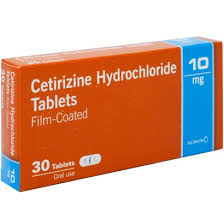
Cetirizine hydrochloride tablets in blister pack
CategoriesUncategorized

Cetirizine Hydrochloride

Cetirizine Hydrochloride: Uses, Dosage, Side Effects & Complete Guide

Introduction

Cetirizine hydrochloride, widely known under the brand name Zyrtec, is a second‑generation antihistamine trusted by millions worldwide. It provides effective relief from allergy symptoms such as sneezing, runny nose, itchy eyes, and hives. Unlike older antihistamines, cetirizine causes less drowsiness, making it suitable for daily use.

What is Cetirizine Hydrochloride?

  • Drug Class: Antihistamine (second generation)
  • Generic Name: Cetirizine hydrochloride
  • Brand Names: Zyrtec, Reactine, Aller‑Tec
  • Mechanism of Action: Blocks histamine H1 receptors to reduce allergic responses.

Medical Uses of Cetirizine Hydrochloride

Seasonal Allergies (Hay Fever)

Relieves sneezing, nasal congestion, itchy throat, and watery eyes caused by pollen and dust.

Perennial Allergic Rhinitis

Effective for year‑round allergies triggered by dust mites, mold, and pet dander.

Chronic Urticaria (Hives)

Reduces itching and swelling associated with chronic hives.

Skin Allergies

Helps manage itching and redness in atopic dermatitis and allergic rashes.

Dosage and Administration

Adults & Children (6+ years)

  • Typical dose: 10 mg once daily (tablet or liquid).

Children (2–5 years)

  • Dose: 2.5–5 mg once daily.

Children (6 months–2 years)

  • Dose: 2.5 mg once daily (liquid form).

Important: Always follow medical advice. Do not exceed recommended dosage.

Side Effects of Cetirizine Hydrochloride

Common Side Effects

  • Mild drowsiness
  • Dry mouth
  • Fatigue
  • Headache

Serious Side Effects

  • Difficulty breathing
  • Severe allergic reaction (rare)
  • Rapid heartbeat

FDA Warning

Stopping cetirizine after long‑term use may cause severe itching in rare cases.

Precautions and Warnings

  • Pregnancy & Breastfeeding: Generally considered safe, but consult a doctor.
  • Children: Safe from 6 months of age with adjusted dosage.
  • Drug Interactions: May interact with alcohol, sedatives, and other antihistamines.
  • Medical Conditions: Use cautiously in patients with kidney or liver impairment.

Cetirizine vs Other Antihistamines

Antihistamine Generation Drowsiness Risk Duration Common Brand
Cetirizine Second Low 24 hrs Zyrtec
Loratadine Second Very Low 24 hrs Claritin
Fexofenadine Second Very Low 24 hrs Allegra
Diphenhydramine First High 4–6 hrs Benadryl

FAQs About Cetirizine Hydrochloride

Q1: Can I take cetirizine hydrochloride daily? Yes, it is safe for daily use at recommended doses.

Q2: Is cetirizine hydrochloride safe for children? Yes, it can be used from 6 months of age with adjusted dosage.

Q3: Does cetirizine cause drowsiness? It may cause mild drowsiness, but less than first‑generation antihistamines.

Q4: Can I take cetirizine with alcohol? It’s best to avoid alcohol, as it may increase drowsiness.

Q5: How long does cetirizine take to work? Relief usually begins within 1 hour and lasts up to 24 hours.

Storage and Handling

  • Store at room temperature (20–25°C).
  • Keep away from moisture and direct sunlight.
  • Dispose of expired medication safely.

Internal Linking Suggestions

  • Link to a post on Loratadine vs Cetirizine
  • Link to a guide on Managing Seasonal Allergies Naturally
  • Link to a blog on Best Antihistamines for Hives

Cetirizine hydrochloride is a safe, effective, and widely available antihistamine for allergy relief. Its long duration of action and low risk of drowsiness make it a preferred choice for both seasonal and chronic allergy sufferers. Patients should follow dosage guidelines and consult healthcare providers for long‑term use.

Pharmacology of Cetirizine Hydrochloride

Cetirizine hydrochloride belongs to the second‑generation antihistamines, which were developed to minimize the sedative effects of first‑generation drugs like diphenhydramine. It works by selectively blocking histamine H1 receptors in the body. Histamine is a chemical released during allergic reactions that causes symptoms such as itching, swelling, and nasal congestion. By preventing histamine from binding to its receptors, cetirizine reduces these symptoms effectively.

Unlike older antihistamines, cetirizine does not cross the blood‑brain barrier as easily, which explains its lower risk of drowsiness. This makes it suitable for people who need allergy relief without compromising their daily activities, such as driving or working.

Clinical Effectiveness

Numerous studies have confirmed the effectiveness of cetirizine hydrochloride in managing allergies and hives. Clinical trials show that cetirizine provides 24‑hour relief with a single dose, making it convenient for patients.

  • Seasonal Allergies: Research demonstrates that cetirizine significantly reduces sneezing, nasal congestion, and itchy eyes compared to placebo.
  • Chronic Urticaria: Patients with persistent hives report reduced itching and improved sleep quality when using cetirizine.
  • Pediatric Use: Studies confirm that cetirizine is safe for children as young as six months, with appropriate dosage adjustments.

Patient Experiences

Many patients prefer cetirizine hydrochloride because it balances effectiveness with tolerability. Common feedback includes:

  • Relief from allergy symptoms within an hour of taking the medication.
  • Minimal drowsiness compared to older antihistamines.
  • Convenience of once‑daily dosing.

However, some users report mild fatigue or dry mouth, especially at higher doses. These side effects are generally manageable and less disruptive than those associated with first‑generation antihistamines.

Global Availability

Cetirizine hydrochloride is available worldwide under different brand names, including Zyrtec, Reactine, and Aller‑Tec. It is sold over‑the‑counter in many countries, making it easily accessible for patients. In some regions, higher doses or liquid formulations may require a prescription, especially for pediatric use.

Its widespread availability contributes to its popularity as a go‑to allergy medication. Pharmacies, supermarkets, and online platforms commonly stock cetirizine, ensuring patients can access it quickly during allergy season.

Practical Tips for Patients

When to Take Cetirizine

  • Take cetirizine at the same time each day for consistent relief.
  • For seasonal allergies, start taking it a few days before pollen season begins.
  • For chronic hives, follow your doctor’s instructions carefully to avoid flare‑ups.

How to Maximize Effectiveness

  • Avoid alcohol, which can increase drowsiness.
  • Combine cetirizine with non‑drug strategies, such as using air filters or reducing exposure to allergens.
  • Stay hydrated to minimize dry mouth.

Who Should Avoid Cetirizine

  • Patients with severe kidney or liver impairment should consult a doctor before use.
  • Those who experience severe allergic reactions should seek immediate medical attention rather than relying solely on cetirizine.

Cetirizine Hydrochloride in Special Populations

Children

Cetirizine is one of the few antihistamines approved for infants as young as six months. Pediatric formulations, such as liquid suspensions, make dosing easier. Parents should follow medical guidance strictly to avoid overdosing.

Elderly Patients

Older adults may be more sensitive to side effects like drowsiness. Lower doses are often recommended.

Pregnant and Breastfeeding Women

Cetirizine is generally considered safe during pregnancy and breastfeeding, but medical consultation is essential.

Long‑Term Use

Cetirizine hydrochloride can be used long‑term for chronic conditions like perennial allergic rhinitis or chronic urticaria. Studies show that prolonged use is safe, but patients should monitor for rare side effects such as severe itching when discontinuing after extended use.

Cetirizine vs Natural Remedies

While cetirizine provides reliable relief, some patients explore natural alternatives such as:

  • Quercetin: A plant flavonoid with antihistamine properties.
  • Butterbur extract: Shown in studies to reduce allergy symptoms.
  • Saline nasal sprays: Help clear allergens from nasal passages.

These remedies may complement cetirizine but are not substitutes for its proven effectiveness.

Conclusion

Cetirizine hydrochloride is a trusted, effective, and widely available antihistamine that provides long‑lasting relief from allergies and hives. Its safety profile, convenience of once‑daily dosing, and minimal drowsiness make it a preferred choice for millions worldwide. Patients should follow dosage guidelines, consult healthcare providers for long‑term use, and combine medication with lifestyle adjustments for optimal allergy management.

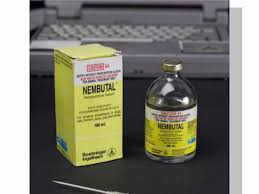
Nembutal Medical Uses Risks
CategoriesPentobarbital

Nembutal Medical Uses Risks

Nembutal (Pentobarbital) – History, Medical Uses, Risks, and Legal Status

Nembutal Medical Uses Risks Welcome to this thread on Nembutal (pentobarbital). This discussion is meant to be educative and informative, helping members understand what Nembutal is, its medical background, risks, and why it is so tightly controlled worldwide. Please share your thoughts, experiences, and questions to enrich the conversation. Buy Xanax 

What Is Nembutal?

Nembutal is the brand name for pentobarbital, a drug belonging to the barbiturate class. Barbiturates were once widely prescribed for insomnia, anxiety, and seizure disorders. They work by depressing the central nervous system, producing sedation and sleep. Buy DPT

  • Chemical class: Barbiturates
  • Mechanism of action: Enhances GABA (gamma‑aminobutyric acid) activity, slowing brain function
  • Forms: Capsules, tablets, and injectable solutions
  • Current use: Rare in human medicine; primarily veterinary (animal anesthesia and euthanasia)

Medical Context

Historically, Nembutal was used for:

  • Treating insomnia
  • Managing anxiety disorders
  • Controlling seizures
  • Inducing anesthesia

However, due to its high risk of overdose and dependence, safer alternatives like benzodiazepines and modern anesthetics have largely replaced it.

Today, Nembutal is:

  • Rarely prescribed in human medicine
  • Commonly used in veterinary practice for anesthesia and euthanasia
  • Controlled worldwide due to its misuse potential

Risks and Side Effects

While Nembutal can be effective, it carries significant risks:

  • Dependence and tolerance: Long‑term use may lead to addiction.
  • Overdose risk: Can depress breathing and lead to death.
  • Withdrawal symptoms: Anxiety rebound, insomnia, tremors, seizures if stopped suddenly.
  • Interactions: Dangerous when combined with alcohol, opioids, or other sedatives.
  • Common side effects: Drowsiness, dizziness, memory problems, difficulty concentrating.

 Legal Status

Nembutal is tightly regulated worldwide:

  • United States: Classified as a Schedule II controlled substance.
  • European Union: Strictly regulated, limited to veterinary use.
  • Australia & Canada: Restricted to hospital or veterinary settings.
  • Other regions: Often banned outright or available only under strict medical supervision.

Possession without prescription is illegal in most countries, and penalties can include fines or imprisonment. Try Doozies Raspberry Gummies 

Historical Background

  • Early 20th century: Barbiturates like Nembutal were introduced as sedatives and hypnotics.
  • Mid‑20th century: Widely prescribed for insomnia and anxiety.
  • Late 20th century: Rising concerns about overdose deaths and addiction led to restrictions.
  • Modern era: Benzodiazepines (e.g., diazepam, lorazepam) and non‑drug therapies replaced barbiturates in most medical contexts.

Nembutal vs Other Sedatives

Medication Onset Duration Common Use Risk Level
Nembutal (Pentobarbital) 15–30 min 4–6 hrs Sedation, veterinary anesthesia High overdose risk
Diazepam (Valium) 30–60 min 20–70 hrs Anxiety, muscle spasms Moderate
Lorazepam (Ativan) 20–30 min 10–20 hrs Anxiety, seizures High dependence
Propofol Immediate Short Anesthesia Safer under medical supervision

Modern Alternatives

For conditions once treated with Nembutal, doctors now recommend:

  • Benzodiazepines (e.g., diazepam, lorazepam)
  • Non‑benzodiazepine sleep aids (e.g., zolpidem)
  • Modern anesthetics (e.g., propofol)
  • Non‑drug therapies: Cognitive Behavioral Therapy (CBT), sleep hygiene, meditation

Ethical Debates Around Nembutal

Nembutal is often mentioned in discussions about euthanasia and assisted dying. Some countries allow its use under strict medical supervision for terminally ill patients, while others ban it entirely.

Key ethical questions include:

  • Should patients have the right to choose assisted dying?
  • How can governments balance compassion with safety?
  • What safeguards are necessary to prevent misuse?

Community Questions

  • Have you studied the history of barbiturates in medicine?
  • Do you think public awareness campaigns help reduce misuse?
  • What are your thoughts on ethical debates around euthanasia and Nembutal?
  • How do modern alternatives compare in terms of safety and effectiveness?

Key Takeaways – Nembutal Medical Uses Risks

  • Nembutal is effective but risky: Provides sedation but carries high overdose potential.
  • Medical supervision is essential: Never start, stop, or adjust dosage without a doctor.
  • Alternatives exist: Safer long‑term options include benzodiazepines, modern anesthetics, and therapy.
  • Legal restrictions are strict: Possession without prescription is illegal in most countries.
  • Ethical debates continue: Assisted dying laws vary worldwide, with Nembutal often at the center.

Global Regulation and Control of Nembutal

One of the most important aspects of understanding Nembutal is recognizing how differently it is treated across the world. Because of its potential for misuse, overdose, and association with assisted dying, governments have taken varied approaches to regulating or banning the drug.

  • United States: Nembutal is classified as a Schedule II controlled substance under the Controlled Substances Act. This means it has recognized medical uses but also a high potential for abuse. Prescriptions are rare and tightly monitored.
  • European Union: Most EU countries restrict Nembutal to veterinary use only. Human prescriptions are virtually nonexistent, and possession without authorization can lead to criminal charges.
  • Australia and Canada: Both countries have strict controls, limiting Nembutal to hospital or veterinary settings. Importation without a license is illegal.
  • Latin America and Africa: Regulations vary widely. Some countries ban it outright, while others allow limited medical use.
  • Switzerland and the Netherlands: These nations are notable exceptions, as they permit Nembutal under strict medical supervision in cases of assisted dying. This has made them focal points in global debates about euthanasia.

This patchwork of laws highlights the complexity of balancing medical utility with public safety.

 Historical Significance of Barbiturates

To fully appreciate Nembutal’s role, it helps to look at the broader history of barbiturates. Introduced in the early 20th century, barbiturates were revolutionary at the time. They provided doctors with reliable sedatives and hypnotics, which were especially useful before the development of modern anesthetics.

  • 1930s–1950s: Barbiturates became the go‑to drugs for insomnia and anxiety. Nembutal was widely prescribed during this period.
  • 1960s–1970s: Rising concerns about overdose deaths and addiction led to tighter controls. High‑profile cases of accidental overdoses, including celebrities, brought public attention to the dangers.
  • 1980s onward: Benzodiazepines like Valium and Ativan replaced barbiturates in most medical contexts. These newer drugs were considered safer, though they too carry risks of dependence.

Nembutal’s decline in human medicine reflects a broader shift toward safer pharmacological options.

Ethical Debates Around Assisted Dying

Nembutal is often at the center of discussions about euthanasia and assisted suicide. In countries where assisted dying is legal, Nembutal is sometimes used under strict medical supervision to provide a peaceful end for terminally ill patients.

Supporters argue:

  • Patients should have the right to choose a dignified death.
  • Nembutal provides a reliable and humane method when suffering is unbearable.
  • Legal frameworks with medical oversight prevent misuse.

Opponents counter:

  • Legalizing Nembutal for assisted dying could lead to abuse.
  • Vulnerable populations, such as the elderly or disabled, may feel pressured.
  • Ethical concerns about the role of doctors in ending life remain unresolved.

This debate continues worldwide, with Nembutal often symbolizing the tension between compassionate care and public safety.

Modern Medical Alternatives

For conditions once treated with Nembutal, doctors now rely on safer alternatives:

  • Benzodiazepines: Diazepam (Valium), lorazepam (Ativan), and clonazepam (Klonopin) are commonly prescribed for anxiety and seizures.
  • Non‑benzodiazepine sleep aids: Medications like zolpidem (Ambien) are used for insomnia.
  • Modern anesthetics: Propofol and midazolam are widely used in surgical settings.
  • Non‑drug therapies: Cognitive Behavioral Therapy (CBT), mindfulness, and lifestyle changes are increasingly recommended for insomnia and anxiety.

These alternatives reflect a shift in medicine toward treatments that balance effectiveness with safety.

Public Health Campaigns and Awareness

In many countries, public health authorities have launched campaigns to raise awareness about the dangers of dopalacze (designer drugs) and controlled substances like Nembutal. These campaigns emphasize:

  • The risks of buying drugs online from unverified sources.
  • The dangers of self‑medicating without medical supervision.
  • The importance of seeking professional help for anxiety, insomnia, or terminal illness.

Such efforts aim to reduce misuse and protect vulnerable populations.

Nembutal Medical Uses Risks-Community Engagement

“This forum post sparks discussion. Here are some guiding questions for readers:

  • How do you view the history of barbiturates in medicine?
  • Should governments allow assisted dying with Nembutal under strict medical supervision?
  • What role should public health campaigns play in preventing misuse?
  • Have you or someone you know experienced treatment with modern alternatives like benzodiazepines or CBT?

Encouraging thoughtful responses helps build a supportive and informed community.

Expanded Key Takeaways

  • Nembutal is historically significant but largely obsolete in human medicine today.
  • Risks outweigh benefits for most medical uses, leading to strict regulation worldwide.
  • Ethical debates around euthanasia keep Nembutal in public discourse.
  • Modern alternatives provide safer options for anxiety, insomnia, and anesthesia.
  • Community awareness is essential to prevent misuse and promote informed choices.

Closing Note: This forum post is for education and discussion only.Doctors strictly control Nembutal, and patients must never use it without medical supervision. Buy 7H Hawaiian Punch k2 Papers

Xanax For Anxiety
CategoriesPills

Xanax For Anxiety

Xanax: Uses, Benefits, Risks, and What You Need to Know

Introduction

Xanax, the brand name for alprazolam, belongs to the benzodiazepine drug class. Doctors prescribe it primarily for generalized anxiety disorder (GAD) and panic disorder, including cases with agoraphobia. While Xanax can be highly effective in reducing symptoms of anxiety, its potential for dependence, misuse, and withdrawal makes it a controlled substance in most countries. Buy IndusClean Multi Cleaner

What Is Xanax?

  • Generic name: Alprazolam
  • Drug class: Benzodiazepine (anxiolytic)
  • Form: Oral tablets (immediate release and extended release)
  • Availability: Prescription only; controlled substance

Xanax works by enhancing the activity of GABA (gamma‑aminobutyric acid), a neurotransmitter that calms brain activity. This leads to reduced anxiety, muscle relaxation, and sedation.

Medical Uses of Xanax

Doctors prescribe Xanax for:

  • Generalized Anxiety Disorder (GAD): Persistent worry and tension.
  • Panic Disorder: Sudden episodes of intense fear, sometimes with agoraphobia.
  • Anxiety linked to depression: Short‑term relief of symptoms.

In rare cases, Xanax may be used off‑label for insomnia or short‑term stress management, though this is less common.

Benefits of Xanax

  • Rapid relief: Works within 30–60 minutes.
  • Effective for panic attacks: Reduces severity and frequency.
  • Short‑term aid: Helps patients manage acute anxiety episodes.
  • Improves quality of life: When used correctly, it can restore daily functioning.

Risks and Side Effects

Despite its benefits, Xanax carries significant risks:

  • Common side effects: Drowsiness, dizziness, memory problems, difficulty concentrating.
  • Serious risks: Dependence, withdrawal symptoms, overdose.
  • Interactions: Dangerous when combined with alcohol, opioids, or other sedatives.
  • Withdrawal: Symptoms include rebound anxiety, insomnia, tremors, and seizures if stopped abruptly.

Comparison Table

Aspect Details
Primary use Anxiety & panic disorders
Onset of action 30–60 minutes
Duration 6–12 hours (IR), up to 24 hours (XR)
Benefits Rapid relief, effective for panic
Risks Dependence, withdrawal, overdose
Legal status Controlled substance (varies by country)

Misuse and Addiction Potential

Xanax is one of the most commonly misused prescription drugs. Because it produces calming and euphoric effects, some people take higher doses than prescribed or obtain it illegally. Misuse can lead to:

  • Tolerance (needing more to feel the same effect).
  • Dependence (body adapts, withdrawal occurs when stopping).
  • Addiction (compulsive use despite harm).

This is why Xanax is classified as a Schedule IV controlled substance in the U.S. and tightly regulated globally.

Safer Alternatives to Xanax

Doctors may recommend alternatives depending on the patient’s condition:

  • SSRIs (Selective Serotonin Reuptake Inhibitors): e.g., sertraline, fluoxetine.
  • SNRIs (Serotonin‑Norepinephrine Reuptake Inhibitors): e.g., venlafaxine.
  • Buspirone: Non‑benzodiazepine anxiolytic.
  • Therapy: Cognitive Behavioral Therapy (CBT) is highly effective for anxiety.
  • Lifestyle changes: Exercise, mindfulness, sleep hygiene.

Key Takeaways

  • Xanax is effective but risky: It provides fast relief for anxiety and panic but carries high dependence potential.
  • Medical supervision is essential: Never start, stop, or adjust Xanax without a doctor’s guidance.
  • Safer alternatives exist: SSRIs, therapy, and lifestyle changes can provide long‑term relief without the same risks.
  • Public awareness matters: Misuse of Xanax is a growing concern, making education critical.

Conclusion

Xanax (alprazolam) remains a powerful tool in managing anxiety and panic disorders, but it is not a cure‑all. Its effectiveness must be weighed against the risks of dependence and misuse. Patients should always consult healthcare professionals before using Xanax and explore safer alternatives for long‑term management.

By understanding what Xanax is, how it works, and its risks, readers can make informed choices and avoid the dangers of misuse.

History of Xanax

Xanax was first approved by the U.S. Food and Drug Administration (FDA) in 1981. It quickly became one of the most prescribed medications for anxiety disorders due to its rapid onset and effectiveness. By the 1990s and early 2000s, Xanax had gained widespread recognition not only in medical circles but also in popular culture. References in music, movies, and media often portrayed Xanax as a “quick fix” for stress, which contributed to its misuse. Buy Doozies Marionberry Gummies 2:1

Today, Xanax remains one of the most prescribed benzodiazepines, but medical professionals emphasize short‑term use only due to the risks of dependence.

Cultural Impact of Xanax

Xanax has become a symbol of modern stress and anxiety management. Unfortunately, its portrayal in pop culture often glamorizes misuse. Songs, social media posts, and celebrity references sometimes normalize recreational use, which can mislead younger audiences.

This cultural visibility has led to:

  • Increased demand in non‑medical settings.
  • Counterfeit pills sold illegally, often laced with dangerous substances like fentanyl.
  • Public health campaigns warning against misuse and promoting safer alternatives.

Managing Withdrawal Safely

Stopping Xanax suddenly can be dangerous. Doctors recommend a gradual tapering process to reduce withdrawal symptoms. Common strategies include:

  • Medical supervision: Doctors adjust dosage slowly over weeks or months.
  • Supportive therapy: Counseling and CBT help patients manage anxiety without medication.
  • Alternative medications: SSRIs or buspirone may replace Xanax during tapering.
  • Lifestyle support: Exercise, meditation, and sleep hygiene reduce withdrawal discomfort.

Withdrawal symptoms may include:

  • Rebound anxiety
  • Insomnia
  • Tremors
  • Sweating
  • Seizures (in severe cases)

This highlights why professional guidance is essential when discontinuing Xanax.

Xanax vs. Other Benzodiazepines

Drug Onset Duration Common Use Risk Level
Xanax (Alprazolam) 30–60 min 6–12 hrs Anxiety, panic High dependence
Valium (Diazepam) 30–60 min 20–70 hrs Anxiety, muscle spasms Moderate
Ativan (Lorazepam) 20–30 min 10–20 hrs Anxiety, seizures High
Klonopin (Clonazepam) 20–40 min 18–50 hrs Panic, seizures High

This comparison shows Xanax’s shorter duration, which partly explains why patients may take it more frequently, increasing dependence risk.

Frequently Asked Questions (FAQs)

1. Is Xanax addictive? Yes. Even at prescribed doses, long‑term use can lead to dependence.

2. How long does Xanax stay in your system? Typically 6–12 hours for immediate release, up to 24 hours for extended release.

3. Can Xanax be used for sleep? Doctors may prescribe it short‑term for insomnia, but safer alternatives exist.

4. What happens if you mix Xanax with alcohol? This combination is extremely dangerous, increasing the risk of overdose and respiratory depression.

5. Are there natural alternatives to Xanax? Yes — meditation, yoga, herbal supplements (like chamomile or valerian root), and therapy can help manage anxiety.

Final Thoughts

Xanax remains a powerful medication for anxiety and panic disorders, but its risks cannot be ignored. While it offers rapid relief, misuse and dependence are serious concerns. Patients should always follow medical advice, avoid recreational use, and explore safer long‑term alternatives.

Add to cart